Understanding CIS Compliance and E-Invoicing in the UK for 2026
The Construction Industry Scheme (CIS) governs tax deductions for construction contractors and subcontractors in the UK. Staying compliant with CIS invoicing rules is critical for construction businesses to avoid penalties and ensure smooth payment processes. As 2026 approaches, the UK is gearing up for a significant pivot year in e-invoicing practices, setting the stage for a full mandate by 2029.
One of the driving forces behind this change is the expansion of PEPPOL (Pan-European Public Procurement OnLine), an international e-procurement network facilitating standardized invoice exchange. Adoption of PEPPOL e-invoicing protocols will ensure CIS invoices meet government requirements and simplify cross-system interoperability.
Challenges of Manual CIS Invoicing
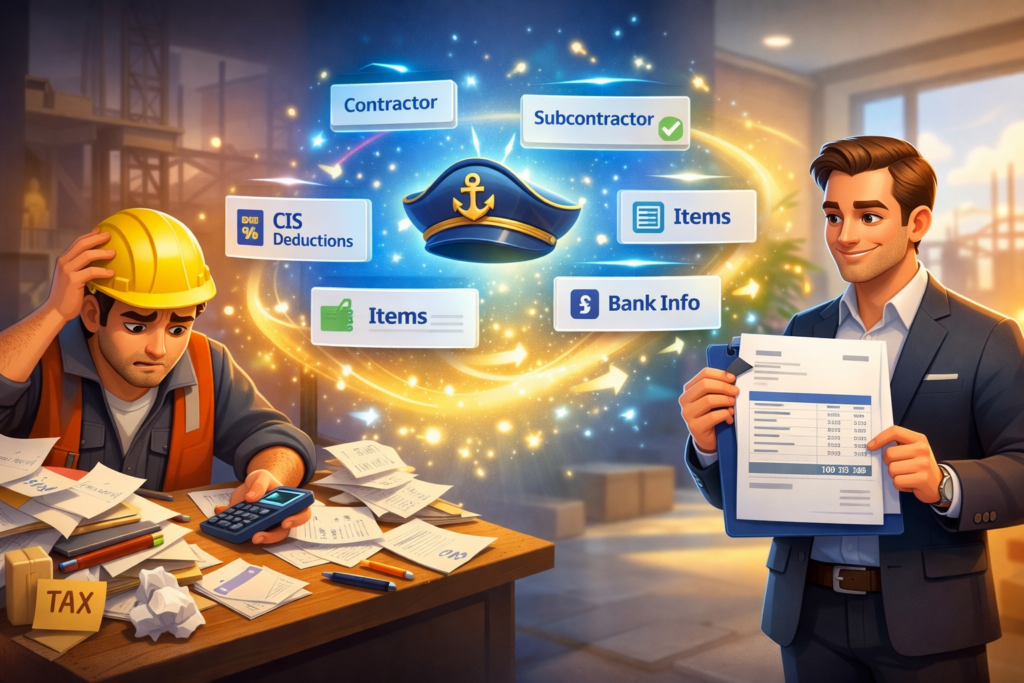
Manual generation of CIS-compliant invoices can be cumbersome. Contractors and subcontractors must include specific details such as tax deduction amounts, contractor and subcontractor information, and bank details while accurately calculating payment amounts post deductions. Errors or omissions can lead to rejected invoices or penalties.
Repeatedly entering client data and maintaining accurate records also slows down invoicing efficiency, leading to delayed payments and cash flow challenges.
To address these challenges, DocMiral offers a free, no-account-required CIS invoice generation App specifically designed for UK construction businesses preparing for 2026 and beyond.
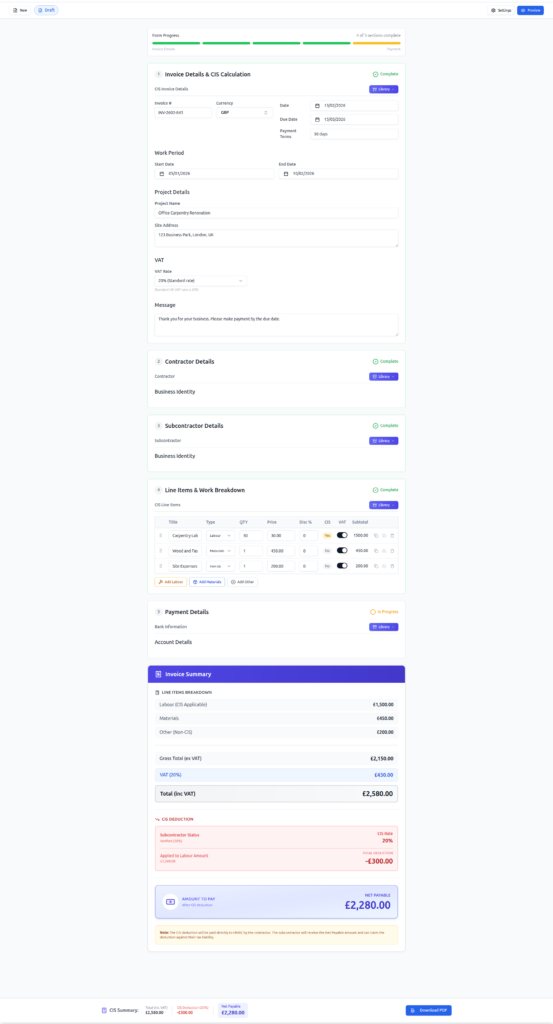
This tool leverages DocMiral’s MiniApps platform, providing a structured input experience through dedicated forms for contractors, subcontractors, businesses, customers, CIS-specific products, and bank information.
How It Works: Step-by-Step Guided Input
Step 1: Enter contractor and subcontractor details using MiniApps forms that enforce required CIS fields.
Step 2: Add business and customer information through predefined fields ensuring compliance with UK tax authority requirements.
Step 3: Select CIS-specific product codes and input work details to accurately specify the nature of construction services.
Step 4: Fill bank information to facilitate payment details inclusion on the invoice.
Step 5: The app automatically calculates payment amounts, tax deductions, and totals based on the inputs provided.
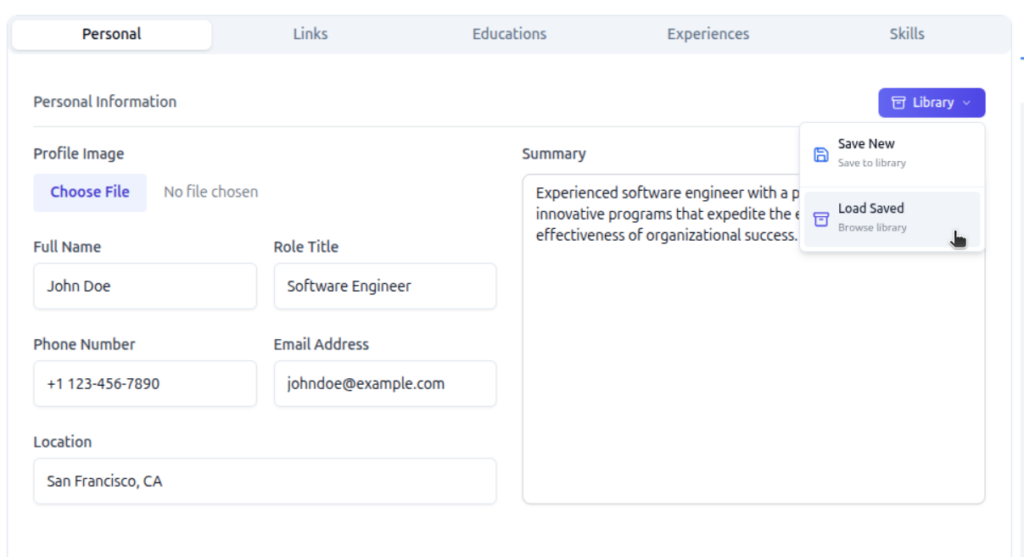
Data entered can be saved in reusable Buckets, allowing repeat clients’ information to be quickly loaded in future invoices, saving time and improving accuracy.
Verification with TARS AI Chat Assistance
Once your invoice draft is complete, leverage DocMiral’s integrated TARS AI chatbot for live verification. TARS reviews your invoice data, flags any compliance or calculation issues, and suggests corrections before finalizing. You can open your document from documents list to access Tars.
Exporting and Using Your CIS-Compliant Invoice
After completing and verifying your invoice, export it as a professionally formatted PDF ready for delivery to clients, upload to accounting software, or submission via PEPPOL networks.
Why Automate CIS Invoice Generation in 2026?
Prepare for the 2029 mandatory e-invoicing standards early.
Reduce errors and avoid costly penalties.
Save time with reusable data Buckets and guided inputs.
Ensure compliance with the latest CIS rules effortlessly.
Improve cash flow with faster, trustworthy invoicing.
Try DocMiral’s Free CIS Invoice Generator Today
No registration or account is needed to get started. Visit DocMiral’s CIS Invoice Generator now and experience seamless CIS-compliant invoice automation designed for UK construction businesses in 2026.
The Cost of Repetitive Data Entry in Document Workflows
Anyone who has dealt with generating documents such as invoices, contracts, or reports understands the frustration of repeatedly typing the same customer or product information over and over. This repetitive data entry is not just tedious; it is a significant source of errors and wasted time. Professionals often spend hours re-entering details that should be readily accessible, slowing down the entire document creation process.
How Reusable Data Buckets Revolutionize Document Creation in 2026
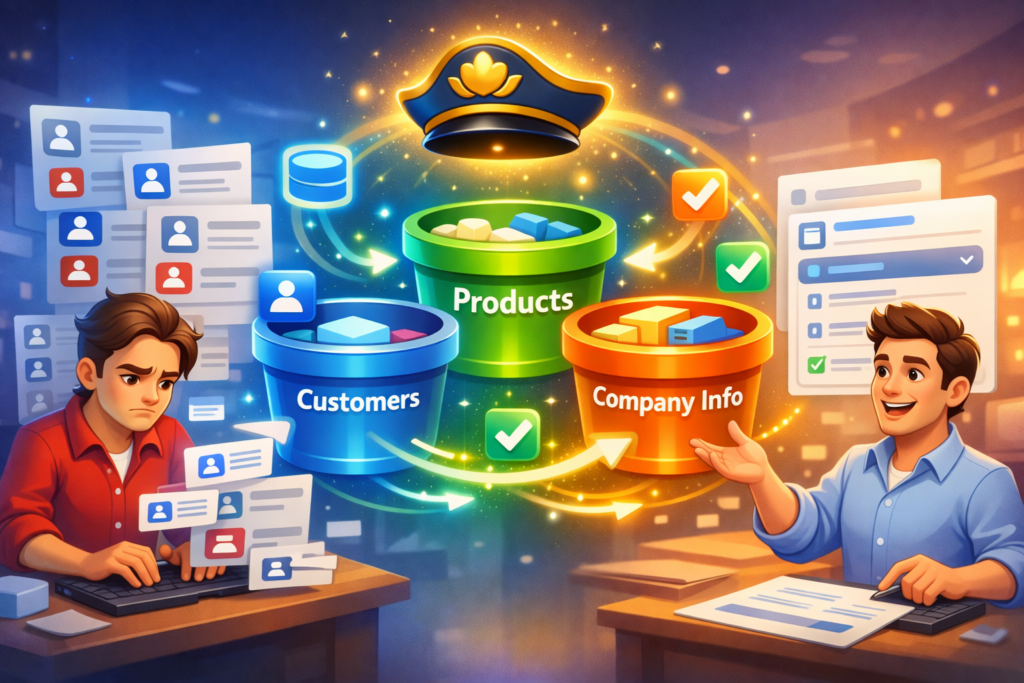
The year 2026 brings solutions that leverage agentic and reusable data systems to eliminate this redundancy. At the forefront of this innovation is DocMiral’s Buckets. These are named, reusable data stores that hold essential information—such as customers, products, and company details—that can be accessed across templates and document types.
Introducing DocMiral Buckets: Your Data, Smarter and Always Ready
DocMiral Buckets enable template creators and document users to store structured data separately from templates. This means once a customer’s information is stored in a bucket, it can be auto-filled into any document template without repeatedly typing or manual lookups.
Creating Named Data Stores
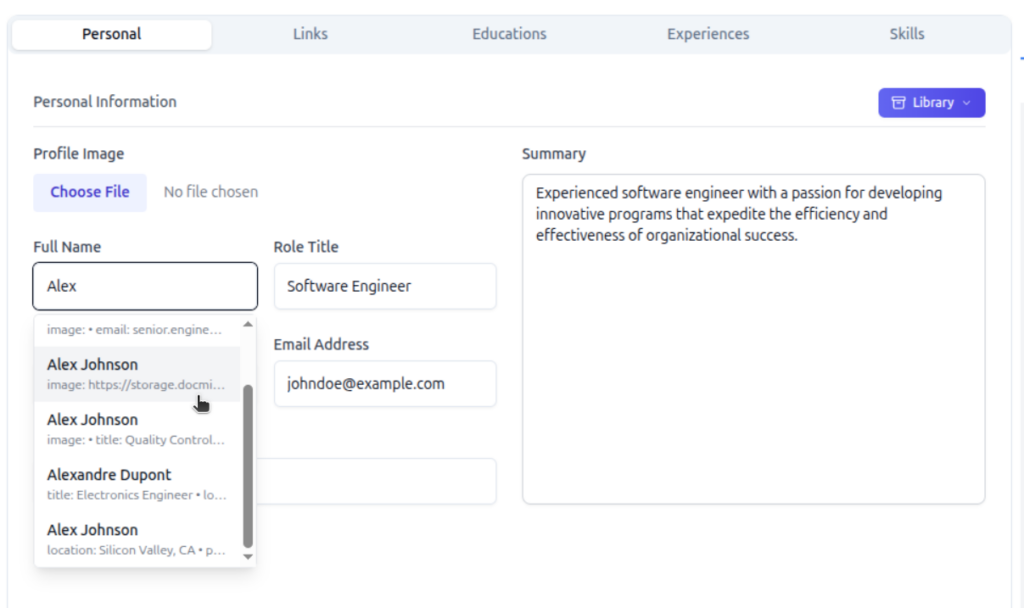
Buckets are organized by types such as customers, products, and company info. You can create and manage these buckets from your profile or on each section in document builder (library button), defining the fields relevant to each data set such as name, address, contact details for customers, or SKU, price for products.
Autocomplete and Intelligent Lookup in Document Forms
When filling in a document, DocMiral’s form UI offers intelligent autocomplete suggestions from these buckets. Start typing a customer name, and the system suggests matches, populated with all corresponding information fetched automatically. This is powered by TARS AI lookup integration, which intelligently retrieves and populates fields based on context.
Saving Document Data Back to Buckets
As you generate documents, any new or updated customer or product data entered can be saved back to the appropriate bucket. This creates a continuous feedback loop ensuring your reusable data buckets stay current and synchronized with your workflow.
Workflow in Action: Build Once, Reuse Everywhere
Imagine building an invoice for your customer once and saving that customer’s data in a bucket. The next time you create any document involving that customer, all information auto-fills instantly, eliminating repetitive input.
This streamlined approach can save you 15+ hours per week in document generation alone, freeing time for higher-value work and reducing error risks.
Getting Started: Create Your First Bucket Today
Ready to stop re-typing customer info and embrace the future of document automation? Define your data fields, add your entries, and watch the magic of seamless reuse across templates and workflows.
Say goodbye to repetitive typing, and hello to smarter document workflows in 2026.
Agentic AI Document Automation: What Changes in 2026 (And How to Use It)
The landscape of document automation is on the cusp of a significant transformation. As we enter 2026, the traditional focus on data extraction is shifting dramatically towards advanced reasoning and agentic workflows. This evolution allows for autonomous, end-to-end document processes that are smarter, more flexible, and far more intuitive.
From Data Extraction to Agentic Reasoning
For years, document automation centered on extracting data points from forms, PDFs, or unstructured text—an essential but limited capability. In 2026, the paradigm shifts as multi-layered AI systems replace monolithic tools. These systems not only parse data but understand context, reason through complex instructions, and autonomously execute tasks without manual intervention.
This agentic approach combines multiple AI components working collaboratively in layers, including chat interfaces, smart template builders, and contextual file parsing with reasoning capabilities. The goal is a seamless, dynamic workflow where users can interact in natural language, and the AI interprets, adapts, and generates documents accordingly.
DocMiral’s TARS: The Embodiment of Agentic AI
DocMiral’s TARS is uniquely positioned at the forefront of this transformation. As an agentic AI engine, TARS integrates chat-based template editing and customization, Smart Builder layers for structured design, and advanced file parsing with reasoning to deliver sophisticated document automation workflows.
Key Use Cases with TARS Agentic Features
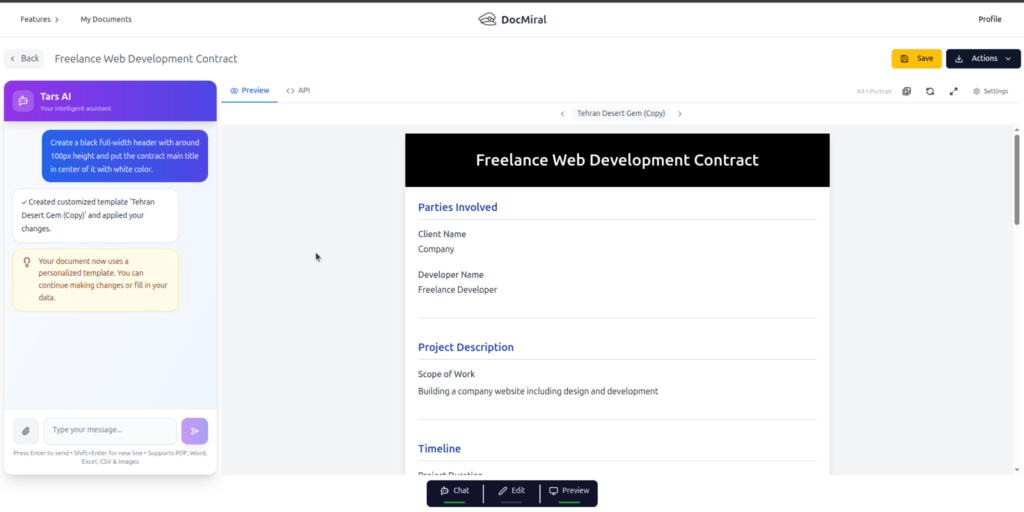
Chat to edit design and data: Users can simply instruct TARS, “Make the header dark blue and add skills from this CV,” and the AI applies precise changes without manual coding or template rebuilding.
Combining fill and customize intents: TARS understands both the intent to fill data and to customize layout or styling simultaneously, bridging gaps traditional tools can’t handle without complex workflows.
Context-aware changes via attachments: By attaching PDFs or images, users provide context for TARS to reason over. For instance, uploading a CV lets TARS extract relevant skills and integrate them into an existing document design dynamically.
Benefits Over Traditional Automation Tools
Agentic AI workflows, as embodied by TARS, are revolutionizing document automation with several clear advantages:
Surgical patches versus full rewrites: Instead of rebuilding whole templates for minor edits or new data points, TARS applies precise, context-aware patches, saving time and reducing errors.
Governance through Buckets: Data libraries called Buckets allow for reusable, governed, and structured inputs that maintain compliance and consistency across automated documents.
Natural interaction and reduced complexity: Users interact in simple language instead of complex scripting or template languages, making automation accessible beyond developers and designers.
Example Scenario: “Make Header Light Blue”
This typical instruction showcases the agentic power of TARS. The user chats with the AI, attaches a CV PDF, and requests specific styling changes plus data extraction and insertion. TARS parses the CV, extracts skill information, updates the document header’s color, and injects the skills into the appropriate section of the document—all in one seamless workflow.
Why 2026 is the Pivot Year for Document Automation
Several converging trends make 2026 a watershed moment:
AI models have matured to reliably perform reasoning tasks over complex documents.
Hybrid AI architectures combining chat, parsing, and smart builders have become production-ready.
User expectations demand more intuitive and autonomous document processes.
Organizations face pressure for governance, speed, and customization without increasing operational overhead.
Agentic AI meets these demands by moving beyond extraction to context-rich, autonomous document generation and management.
Get Started with Agentic Document Automation Today
DocMiral invites you to experience the future now by chatting with TARS inside the Entity Builder. Explore how agentic AI can transform your document workflows, reducing complexity, boosting agility, and maintaining full governance.
The 2026 No-Code and Agentic AI Boom: A New Era for Document Generation
As we enter 2026, the landscape of no-code platforms is undergoing a major transformation fueled by agentic AI capabilities. No longer limited to simple automation akin to Zapier’s triggers and actions, the new standard is prompt-to-document creation — an intelligent, dynamic process that generates complex documents directly from natural language inputs.
This shift is revolutionizing how freelancers, startups, and professionals produce critical paperwork. Instead of assembling templates manually or writing code, users now rely on AI to understand their intent and deliver smart, fully formatted PDFs in moments.
Introducing DocMiral’s Smart Builder: The Five-Layer Pipeline to Smart PDFs
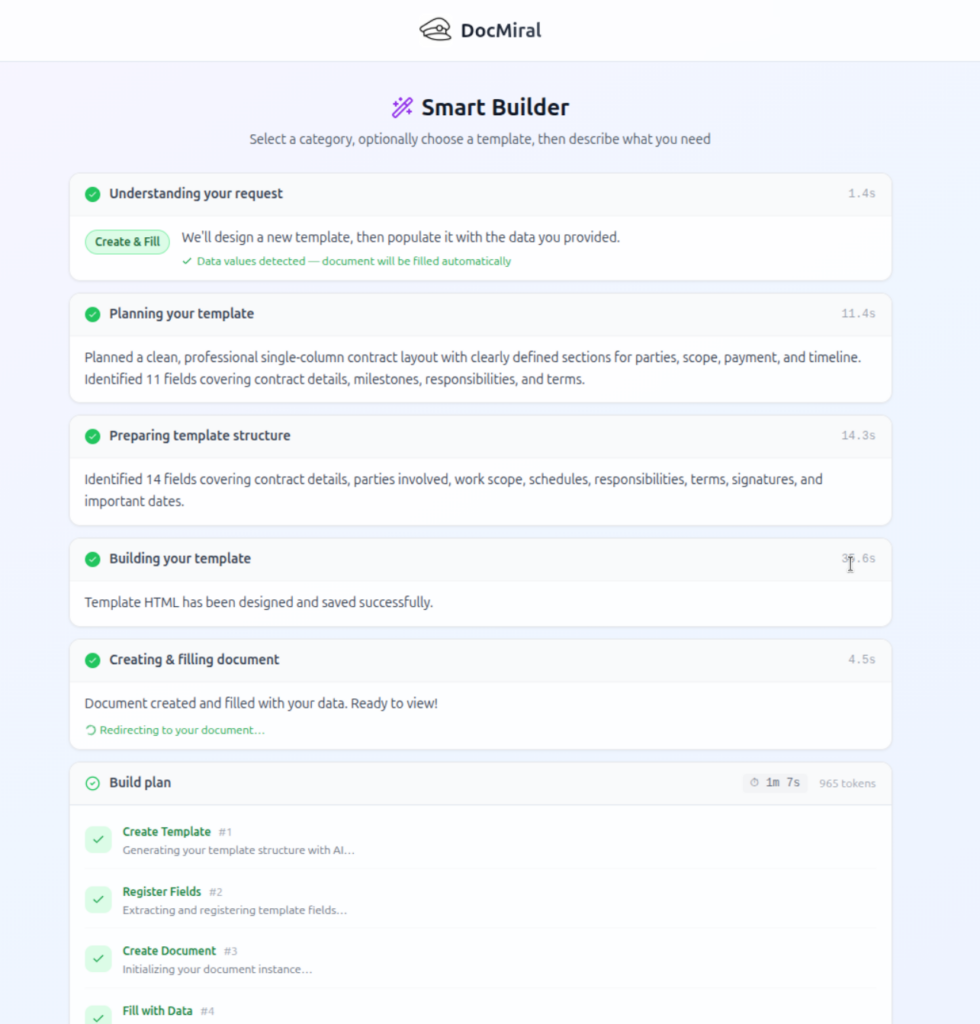
At the forefront of this innovation is DocMiral’s Smart Builder, a no-code document generation engine built around a sophisticated five-layer pipeline:
Intent Detection: AI interprets the user’s prompt to understand the document type and purpose.
Field Extraction: Core data fields required for the document are identified and structured.
Variable Formatting: Data fields are formatted with context-aware styles such as date formats, currencies, and clause-specific variables.
AI-Driven Design with Tailwind CSS: An embedded AI applies responsive Tailwind CSS styles to craft professional layouts automatically.
Finalization and Data Fill: The document template is finalized and populated with the extracted and formatted variables, ready for download or further workflow integration.
Walkthrough: Generating a Freelance Contract from a Brief
Let’s consider a practical example: You want to generate a freelance contract from a simple brief prompt like “Generate a freelance contract from this brief.” Here’s how the Smart Builder handles it seamlessly:
Prompt Input: Enter the brief describing key contract terms such as project scope, payment terms, and deadlines.
File Attachments for Reference: You can attach sample documents or previous contracts for the AI to learn style and tone.
Template Cloning and Adaptation: The engine clones an existing freelance contract template and adapts it dynamically based on your prompt and attachments.
Review and Download: You receive a smart template and a document created based on that template ready to get output PDF contract, fully styled and containing all necessary clauses, which you can review, edit, or send for electronic signing.
No-Code Advantages Over Traditional HTML/Jinja2 Coding
No-code document generation with DocMiral’s Smart Builder offers several advantages over manual template coding using HTML or Jinja2:
Ease of Use: No need to know markup languages or templating syntax — intuitive prompt inputs are enough.
Speed: Documents are created in real-time with AI assistance, eliminating hours spent hand-coding templates.
Flexibility: AI adapts templates on the fly to fit varied user requirements, versus static coded templates requiring developer updates.
Design Automation: Styling is intelligent and responsive thanks to Tailwind CSS integration, without manual CSS tweaking.
Workflow Integration: Generated documents can seamlessly feed into e-signature apps, APIs, and automation without technical overhead.
Get Started with DocMiral’s Smart Builder Today
In 2026, prompt-to-document is setting a new productivity standard. DocMiral’s Smart Builder puts the power of AI-driven no-code document generation at your fingertips, making professional PDF creation accessible, efficient, and intelligent.
Explore the Smart Builder to create smart PDFs with minimal effort. Visit DocMiral to start your journey into the future of document automation.
Resumes in 2026 are no longer just documents. They are structured data pipelines.
Recruiters, ATS systems, and AI screening tools expect resumes that are clean, semantic, and machine-readable. If your CV is not structured properly, it does not matter how good your experience is, it simply gets filtered out.
This is where AI-powered resume generation changes everything. Instead of manually rewriting your CV, you can now upload your existing document, let AI parse it, and generate a fully optimized version instantly.
What Changed in Resume Standards in 2026?
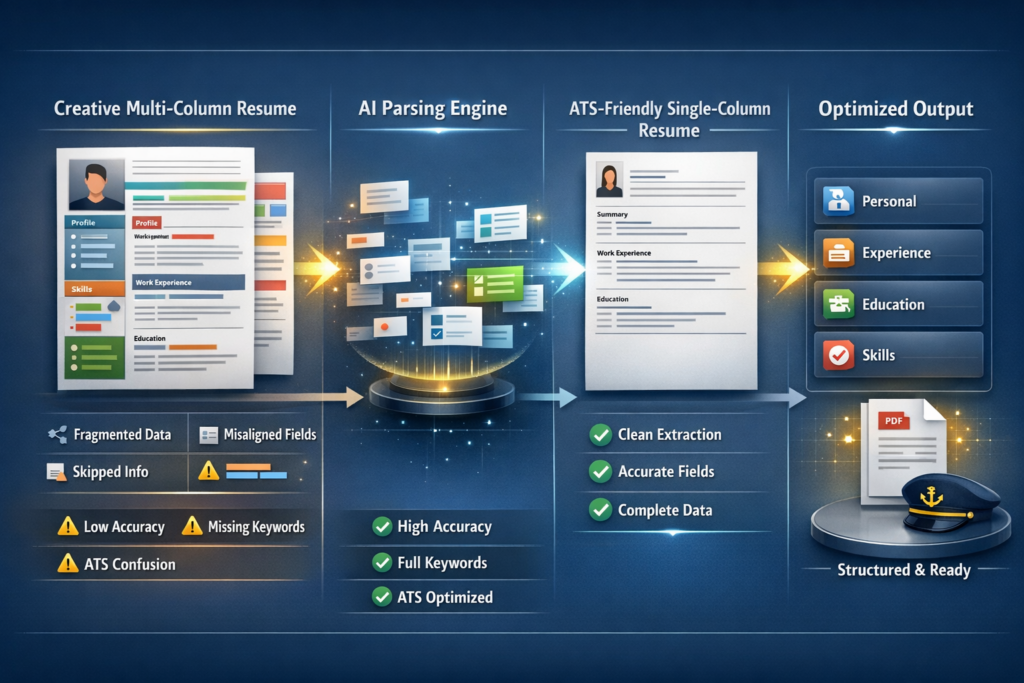
Resume expectations have evolved significantly. The old approach of creative layouts and multi-column designs is no longer effective.
Modern systems prioritize clarity, structure, and semantic meaning.
1. Skills-First Formatting
Recruiters and AI systems now scan for skills before anything else. Your resume needs to clearly expose capabilities in a structured way.
2. Semantic Keyword Matching
ATS systems no longer rely on exact keywords. They understand context. That means your resume needs to be structured, not just filled with buzzwords.
3. ATS 2.0 Parsing Challenges
Modern parsers extract meaning from sections like experience, education, and skills. Poor formatting breaks this extraction.
4. Single-Column Still Wins
Despite all design trends, single-column layouts remain the most reliable format for ATS compatibility.
The New Workflow: From CV Upload to Optimized Resume
Instead of rewriting your resume manually, the modern workflow looks like this:
Upload your existing CV as a PDF
AI extracts structured data from it
Data is mapped into predefined sections
A clean template is auto-filled
You refine it using AI or manual edits
Export as a polished PDF
This is not just convenience. It is a shift from document editing to data-driven generation.
How CV Parsing Works Under the Hood
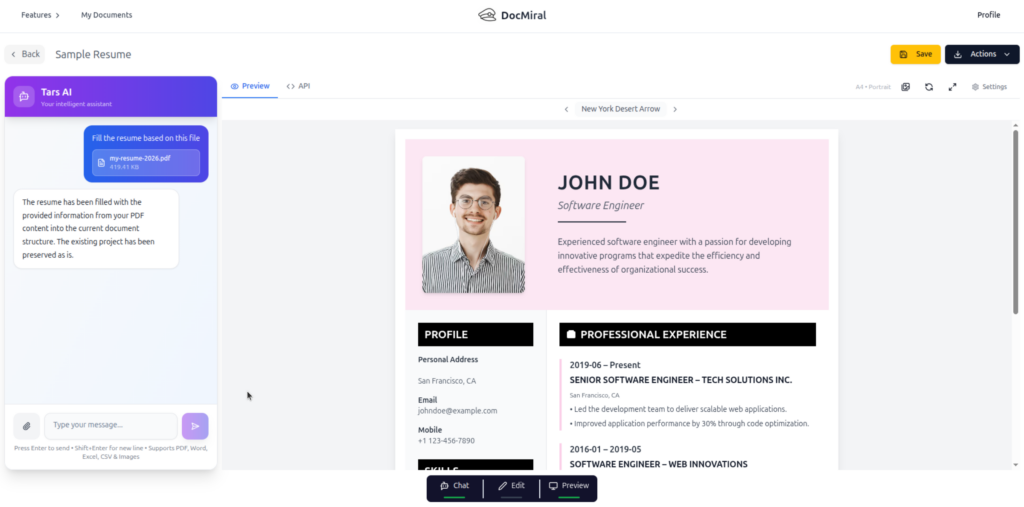
When you upload a CV, AI systems like TARS analyze the document and extract structured information.
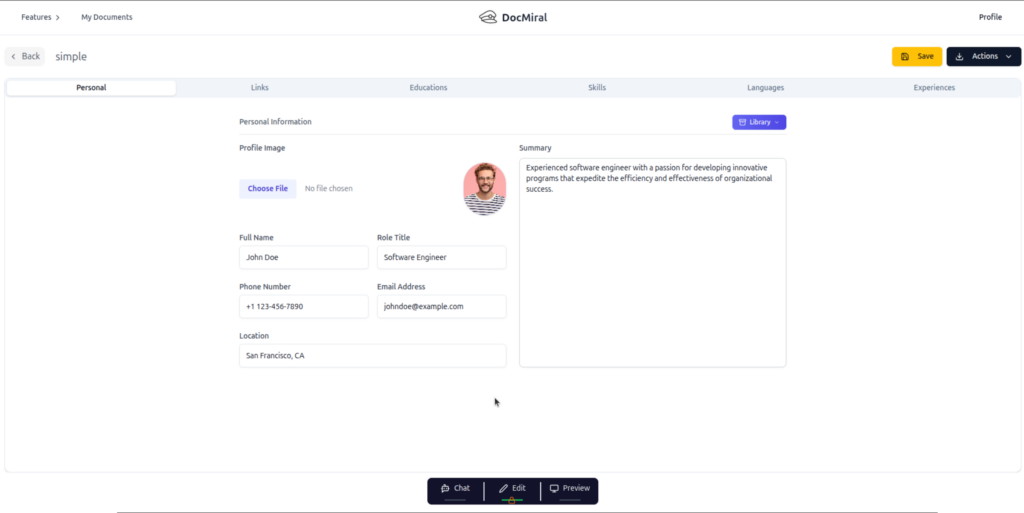
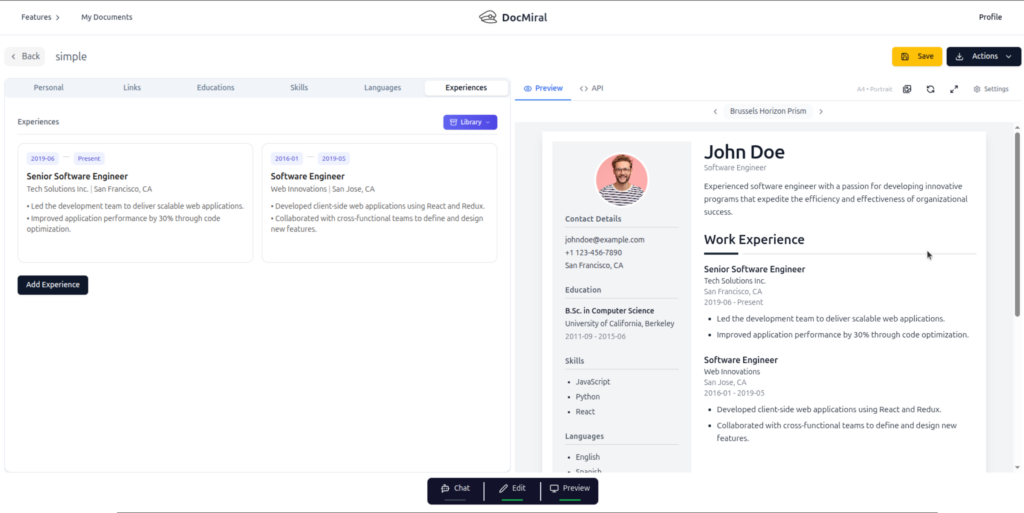
In DocMiral, this maps directly into MiniApps.
MiniApps are predefined structured sections such as:
Personal information
Work experiences
Education
Skills
Projects and certificates
This structure is critical because templates rely on predictable data formats to generate consistent output
Step-by-Step: Build Your AI Resume Generator
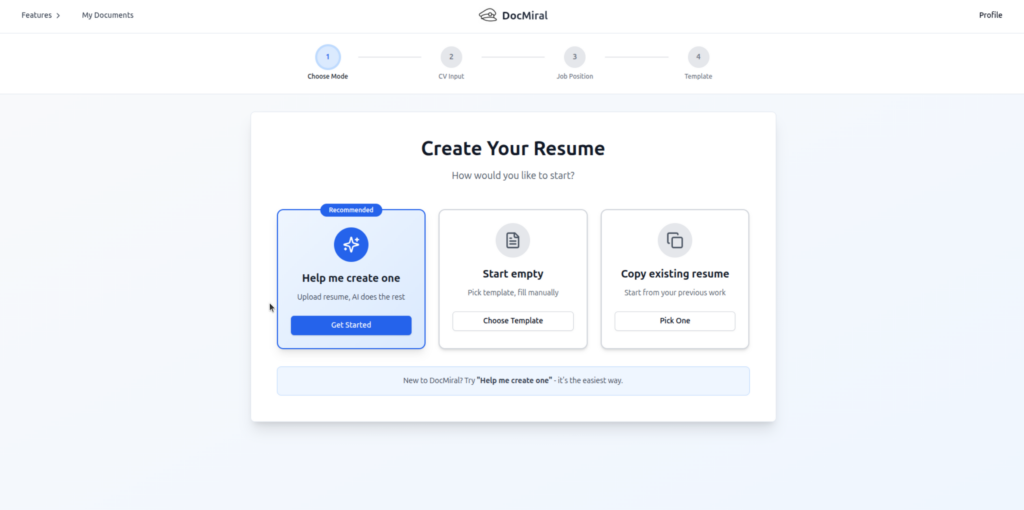
Step 1: Open the Free ATS Resume App
Start with the built-in tool at /apps/resumes.
This app allows you to upload your existing CV and immediately generate a new one without creating an account.
Step 2: Upload Your Old CV
Upload your PDF resume. The system extracts content including job history, education, and skills.
The parsing endpoint converts your CV into structured JSON aligned with resume MiniApps.
Step 3: Auto-Populate a Modern Template
Once parsed, the data is injected into a clean, ATS-friendly template.
This includes:
Single-column layout
Clear section hierarchy
Structured bullet points
Optimized spacing for readability
Step 4: Refine Using TARS AI
You can now chat with TARS directly inside the document builder.
Examples:
“Improve my experience descriptions”
“Add more impact to my bullet points”
“Tailor this resume for a backend engineering role”
TARS updates only the relevant sections without breaking the structure.
Step 5: Live Preview and Adjust
The live preview ensures that every change is reflected instantly.
You can tweak spacing, sections, or content without losing structure.
Step 6: Export Your Resume
Finally, export your resume as a PDF.
The output is clean, consistent, and optimized for both humans and machines.
Why This Beats Manual Resume Builders
Traditional resume builders treat resumes like forms. This approach treats them like systems.
No repetitive data entry
No formatting guesswork
No broken layouts
No rewriting from scratch
Instead, you work with structured data that can be reused, refined, and regenerated.
Reuse Your Data with Buckets
One of the biggest advantages is reusability.
Once your resume data is structured, you can store it in Buckets.
This allows you to:
Reuse experience across multiple resumes
Generate role-specific versions instantly
Maintain consistency across documents
This turns your resume into a living data source, not a static file.
Final Thoughts
Building an AI resume generator in 2026 is no longer complex.
The combination of CV parsing, structured MiniApps, and dynamic templates makes it accessible to both users and developers.
If you are still editing resumes manually, you are working against the system.
The future is structured, automated, and AI-assisted.
Try It Yourself
You can try the free ATS resume generator directly at
If you’ve ever sent invoices regularly—whether as a freelancer, developer, or small business owner—you’ve probably repeated the same steps dozens (or hundreds) of times:
Copy an old invoice
Update client details
Adjust line items
Recalculate totals
Export to PDF
Send it
It works… until it doesn’t.
You start noticing small mistakes: wrong totals, outdated addresses, inconsistent formatting. And as your volume grows, this “simple task” becomes a bottleneck.
This is exactly where automatic invoice creation becomes essential—not as a convenience, but as infrastructure.
The Problem with Manual Invoicing
Manual invoicing breaks down quickly as complexity increases.
1. Repetitive Data Entry
You repeatedly type:
Customer name and address
Product or service details
Pricing and quantities
This is not just tedious—it’s error-prone.
2. Calculation Mistakes
Even small errors in:
Tax calculations
Discounts
Totals
can create trust issues or require reissuing invoices.
3. Inconsistent Formatting
Over time, invoices diverge:
Different layouts
Missing fields
Misaligned branding
This reduces professionalism.
4. No Scalability
Creating 2 invoices manually is fine. Creating 200 per month is not.
What “Automatic Invoice Creation” Really Means
Automatic invoicing is not about “auto-filling a PDF.”
It’s about template-based document generation.
Core Idea
You define a template once, and then generate invoices by injecting data.
In every professional setting, document workflows clutter our days with repetitive tasks: drafting invoices, compiling meeting minutes, issuing contracts, or preparing project proposals. These processes, while crucial, often consume valuable time that could be better spent on strategic work. Automating these document workflows can drastically improve efficiency, reduce errors, and ensure consistency.
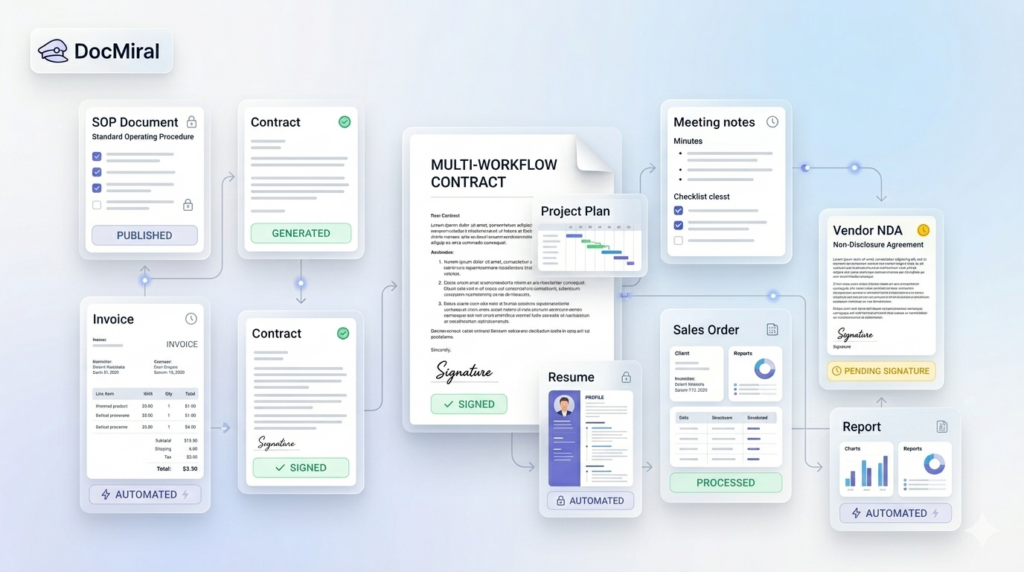
In this post, we explore 10 common document workflows you can automate today using DocMiral, an AI-powered document creation platform tailored to streamline document generation and management. We’ll break down each type of document, illustrate the automation approach, and show how DocMiral’s features can optimize these workflows.
1. Invoices
Invoice creation follows predictable patterns: client details, list of services or products, amounts, taxes, and payment terms. Automating invoices saves hours of manual entry and minimizes errors.
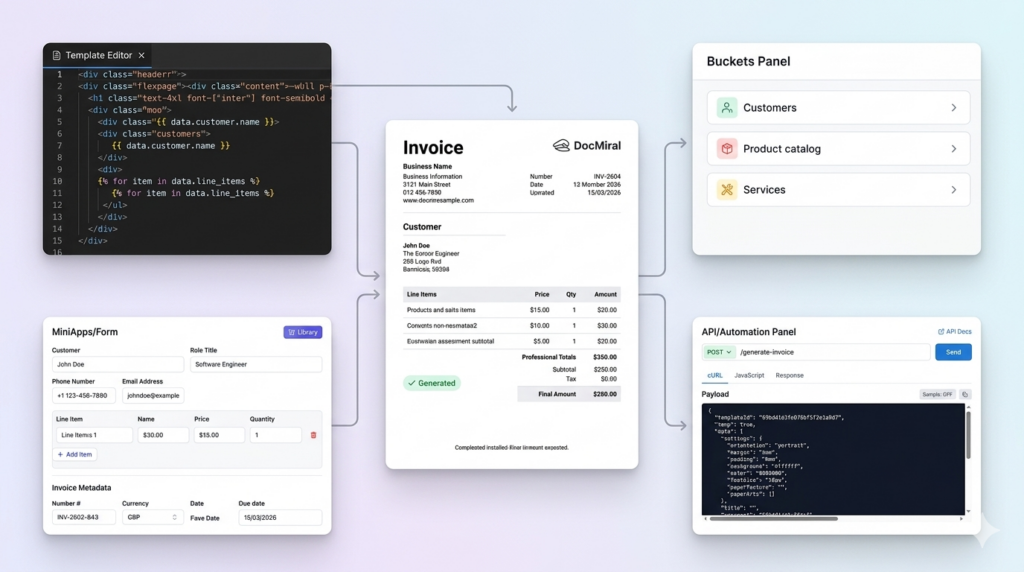
Using DocMiral, you can create an HTML + TailwindCSS invoice template with dynamic variables for client data and line items. Integration with data Buckets allows for mapping product and pricing information automatically. With API calls, invoices generate instantly when a sale is recorded.
Employment contracts require customized clauses based on role, salary, and jurisdiction but follow a consistent structure. Automation reduces drafting time and standardizes employment terms.
DocMiral’s MiniApps can collect structured inputs (like position, salary, benefits), and AI-powered templates from Tars AI can generate contract drafts. Variables make it easy to customize terms, and the platform supports e-signature integration for a smooth execution.
Meeting minutes are essential for documentation and follow-up but often inconsistently formatted and delayed.
Leverage a reusable meeting minutes template with prebuilt sections for agenda, attendees, discussion points, decisions, and action items. Use DocMiral’s automation to populate attendee lists from Buckets and draft summaries using AI-powered suggestions from meeting transcripts uploaded via MiniApps.
Whether sales reports, status updates, or technical summaries, reports require consistent structure and accurate data integration.
DocMiral allows API-driven data insertion from databases or analytical tools, populating tables, charts, and insights automatically into HTML templates styled with TailwindCSS. This ensures reports are timely and visually coherent.
Recruiters and professionals want well-formatted resumes that highlight key skills and experiences.
With DocMiral, users can select from multiple resume templates, fill out MiniApps capturing structured resume data, and then generate polished PDF resumes instantly. Templates ensure branding consistency, and AI assistance helps optimize phrasing.
6. Quotations
Preparing quotations manually risks inconsistent pricing and delays.
Templates linked to Buckets containing price lists auto-fill costs and customizable terms. When combined with DocMiral’s automation, sales teams can generate quotes quickly from lead data, reducing turnaround time and errors.
7. Certificates
Certificates for courses, events, or achievements need personalized text and uniform design.
DocMiral supports dynamic generation of certificates, pulling recipient names and course details from Buckets. Templates define the visual design using TailwindCSS, ensuring a professional look for every certificate generated.
8. Project Proposals
Project proposals demand customization but reuse of core content and consistent formatting.
DocMiral’s modular templates enable insertion of client-specific variables, scope, timeline, and pricing details captured via MiniApps. Automated generation ensures proposals are ready faster, with fewer revisions.
9. Legal Letters
Legal correspondence often repeats core phrases and clauses tailored by case specifics.
Using prebuilt templates, DocMiral automates drafting by filling in party names, dates, and legal references from Buckets. AI assistance can help draft initial letter bodies based on context, speeding up legal workflow.
10. NDAs (Non-Disclosure Agreements)
NDAs require precise terms but need quick generation for many partners or vendors.
DocMiral templates enable rapid population of counterparty details and confidentiality clauses. Integration with e-signature apps makes execution seamless, closing contracts faster.
How DocMiral Brings It All Together
At the core, DocMiral integrates template design with data management and AI-driven generation. Key components beneficial to these workflows include:
Templates with HTML + TailwindCSS: Let you define flexible, visually consistent designs for all documents.
Buckets: Centralized reusable data libraries that feed document variables.
MiniApps: Structured data capture interfaces that standardize input before document generation.
AI Templates with Tars AI: Produce drafts and text expansions automatically, reducing manual writing.
API & Automation: Connect your systems to trigger document generation and delivery seamlessly.
E-Signature Integration: Streamlines contract and agreement execution embedded within the workflow.
By combining these capabilities, DocMiral transforms tedious, error-prone manual drafting into automated, repeatable workflows. The platform is designed to serve both template creators (developers and designers who build these document systems) and end users (professionals who generate documents). It fosters consistency, speeds turnaround, and reduces operational overhead.
Conclusion
Automating your document workflows is more than a productivity hack — it ensures accuracy, compliance, and professionalism in everyday business activities. The 10 document types discussed here are prime candidates for automation, delivering immediate value.
DocMiral equips you with the tools to build, customize, and automate these document workflows easily. With modular templates, reusable data, AI assistance, and seamless integrations, you can focus on what really matters: scaling your business and improving client experiences.
Designing document templates has traditionally been a slow, technical process.
You sketch a layout, write HTML code, define variables, test the data structure, tweak the layout again, export a PDF, and repeat. For many developers and teams, this process can take hours — sometimes days — before a template becomes reusable.
But what if you could skip most of that process and start with a simple prompt?
With DocMiral’s Smart AI Builder, you can describe the document you want in plain language, and the system will generate a complete template layout — including fields, structure, and design.
This article walks through how that works using a real example.
The Problem: Document Templates Are Harder Than They Look
When teams need automated documents — invoices, reports, contracts, meeting minutes — they usually face two challenges:
Designing a professional layout
Defining the dynamic data structure
A document template isn’t just static HTML. It needs:
dynamic fields
lists and tables
reusable structure
consistent layout
PDF-friendly formatting
For example, a board meeting minutes document might include:
meeting metadata
attendees and absentees
agenda items
discussion notes
action items
Each of those pieces needs its own structure.
Traditionally, developers had to build this manually.
DocMiral approaches this differently.
The Idea: Describe the Document Instead of Coding It
With the Smart Builder, you simply describe the document you want.
For example:
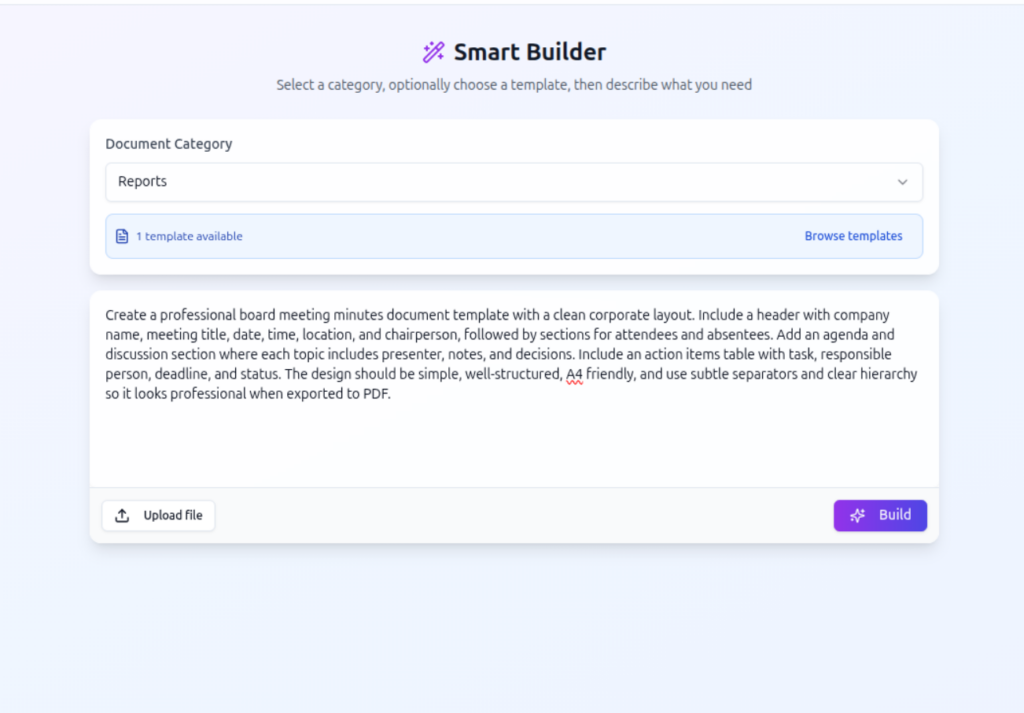
“Create a professional board meeting minutes document template with a clean corporate layout. Include a header with company name, meeting title, date, time, location, and chairperson, followed by sections for attendees and absentees. Add an agenda and discussion section where each topic includes presenter, notes, and decisions. Include an action items table with task, responsible person, deadline, and status. The design should be simple, well-structured, A4 friendly, and use subtle separators and clear hierarchy so it looks professional when exported to PDF.”
This single prompt contains everything the system needs to generate the template.
Step 1 — Writing the Prompt
In the Smart Builder interface, the user first selects a document category and then describes the document they want.
The description doesn’t need to be technical. It just needs to explain:
what sections the document has
what information each section contains
the overall style or layout
For example:
professional
minimal
A4 friendly
clear hierarchy
corporate style
These cues help the AI understand how to design the template.
Step 2 — Understanding the Request
Once the prompt is submitted, DocMiral first determines what the user wants to do.
Is the user:
creating a template
filling a template
customizing an existing template
doing both creation and filling?
In this case, the system detects:
Create Template
That means it will design a new template from scratch based on the description.
This is part of DocMiral’s AI pipeline that interprets user intent before any generation begins.
Step 3 — Planning the Template Structure
After understanding the request, the system analyzes the prompt and extracts the document structure.
For our meeting minutes example, the AI identifies fields such as:
company name
meeting title
date and time
meeting location
chairperson
attendees
absentees
agenda items
discussion notes
action items
The system also decides what kind of structure each field should use.
For example:
Section
Data Structure
Attendees
List
Agenda topics
List
Discussion notes
List
Action items
Table
This step transforms a natural language description into a structured template schema.
Step 4 — Generating the Template Fields
Next, the system generates the variables that will appear in the template.
For example:
header fields
lists of agenda topics
tables for action items
metadata fields for meeting details
DocMiral templates support multiple variable types including:
structured MiniApp data
typed input fields
flexible Jinja2 variables
These variables allow documents to adapt to different data while keeping the layout consistent.
The guide explains how the system turns prompts into templates and how to use the builder effectively.
Conclusion
AI is changing how documents are created.
Instead of spending hours designing templates and defining fields manually, you can now describe what you want and let the system generate the structure for you.
DocMiral’s Smart Builder bridges the gap between natural language and document automation — allowing anyone to turn an idea into a working document template.
And as templates become easier to create, document workflows become easier to automate.
Creating powerful templates in DocMiral is not just about design. The real magic happens when your template becomes dynamic — able to accept data, adapt to users, and generate documents automatically.
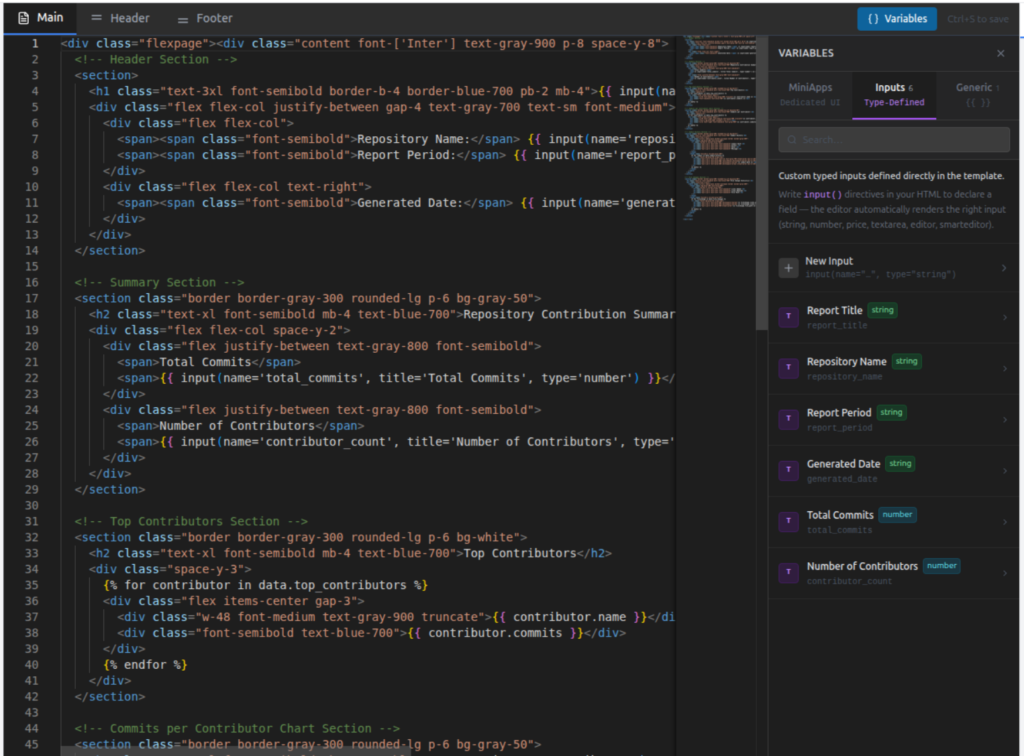
To make this possible, DocMiral templates support three types of variables. Each serves a different purpose and gives you a different level of control.
In this guide, you will learn when and how to use:
MiniApp Fields
Type Defined Fields
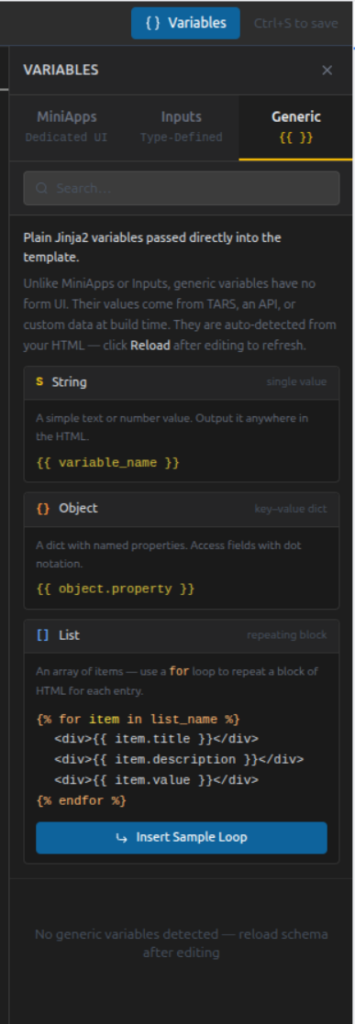
Generic Fields
You do not need to understand backend data structures or schemas. Everything here focuses on what matters to template creators: writing templates effectively.
The Big Picture
Think of template variables as three levels of intelligence:
Variable Type
Best For
UI Support
Complexity
MiniApp Fields
Structured sections
Dedicated UI
Advanced
Type Defined Fields
Single controlled inputs
Built-in field UI
Medium
Generic Fields
Flexible API data
No UI required
Simple
Choose the one that matches how structured your data needs to be.
1. MiniApp Fields (Structured Sections)
MiniApps are the most powerful type of variable.
They connect your template to a dedicated editing interface designed for a specific document section.
Instead of manually defining many fields, you reference a ready-made data editor.
When to Use MiniApps
Use MiniApps when:
A section has multiple related fields
Users need a guided UI
Data may repeat (lists)
The structure is reusable across templates
Typical examples:
Resume personal details
Work experiences
Education history
Invoice items
Inspection reports
Accessing MiniApp Data
MiniApp fields use the mini() directive.
Object Example
{{ mini(name='resumes/personal', key='name') }}
This pulls a single value from the Resume Personal MiniApp.
Example output:
John Doe
List Example
MiniApps can also return lists.
{% for item in mini(
    name="resumes/experiences",
    items=["title", "company", "date_start", "date_end"]
) %}