
Resumes in 2026 are no longer just documents. They are structured data pipelines.
Recruiters, ATS systems, and AI screening tools expect resumes that are clean, semantic, and machine-readable. If your CV is not structured properly, it does not matter how good your experience is, it simply gets filtered out.
This is where AI-powered resume generation changes everything. Instead of manually rewriting your CV, you can now upload your existing document, let AI parse it, and generate a fully optimized version instantly.
What Changed in Resume Standards in 2026?
Resume expectations have evolved significantly. The old approach of creative layouts and multi-column designs is no longer effective.
Modern systems prioritize clarity, structure, and semantic meaning.
1. Skills-First Formatting
Recruiters and AI systems now scan for skills before anything else. Your resume needs to clearly expose capabilities in a structured way.
2. Semantic Keyword Matching
ATS systems no longer rely on exact keywords. They understand context. That means your resume needs to be structured, not just filled with buzzwords.
3. ATS 2.0 Parsing Challenges
Modern parsers extract meaning from sections like experience, education, and skills. Poor formatting breaks this extraction.
4. Single-Column Still Wins
Despite all design trends, single-column layouts remain the most reliable format for ATS compatibility.
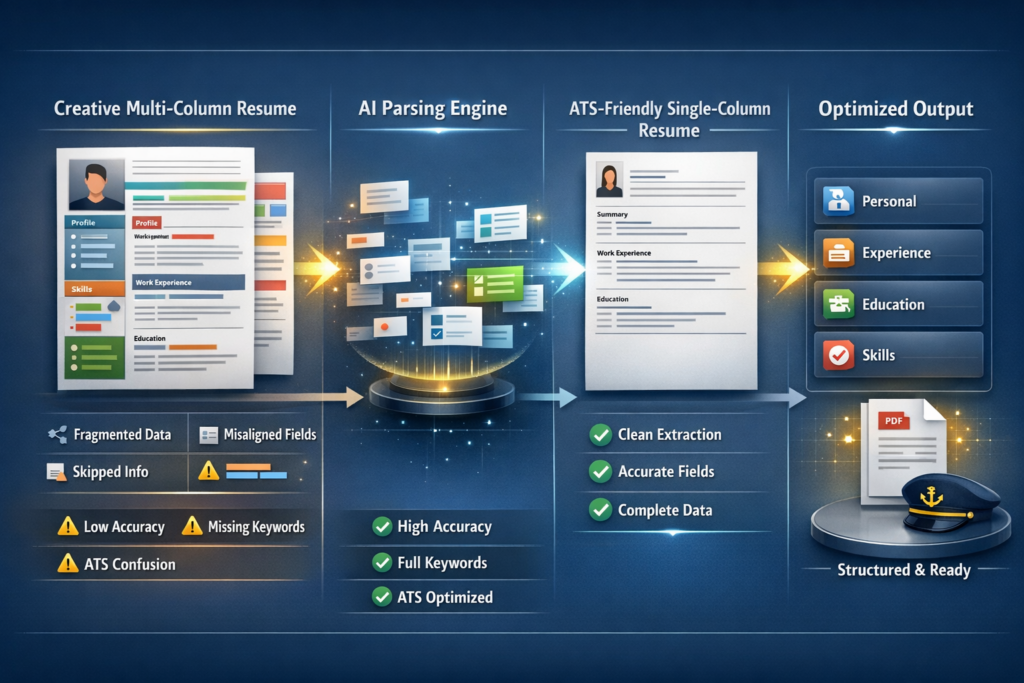
The New Workflow: From CV Upload to Optimized Resume
Instead of rewriting your resume manually, the modern workflow looks like this:
- Upload your existing CV as a PDF
- AI extracts structured data from it
- Data is mapped into predefined sections
- A clean template is auto-filled
- You refine it using AI or manual edits
- Export as a polished PDF
This is not just convenience. It is a shift from document editing to data-driven generation.
How CV Parsing Works Under the Hood
When you upload a CV, AI systems like TARS analyze the document and extract structured information.
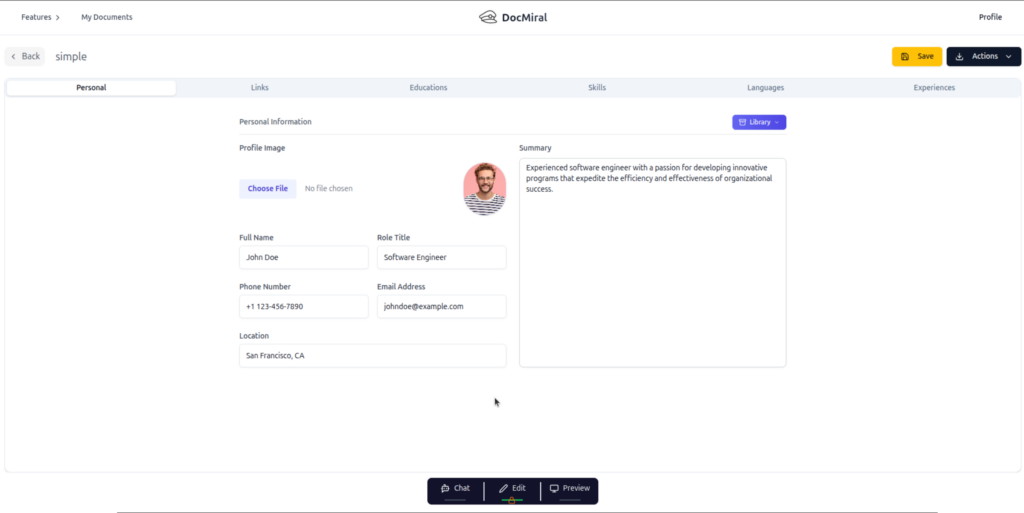
In DocMiral, this maps directly into MiniApps.
MiniApps are predefined structured sections such as:
- Personal information
- Work experiences
- Education
- Skills
- Projects and certificates
This structure is critical because templates rely on predictable data formats to generate consistent output
Step-by-Step: Build Your AI Resume Generator
Step 1: Open the Free ATS Resume App
Start with the built-in tool at /apps/resumes.
This app allows you to upload your existing CV and immediately generate a new one without creating an account.
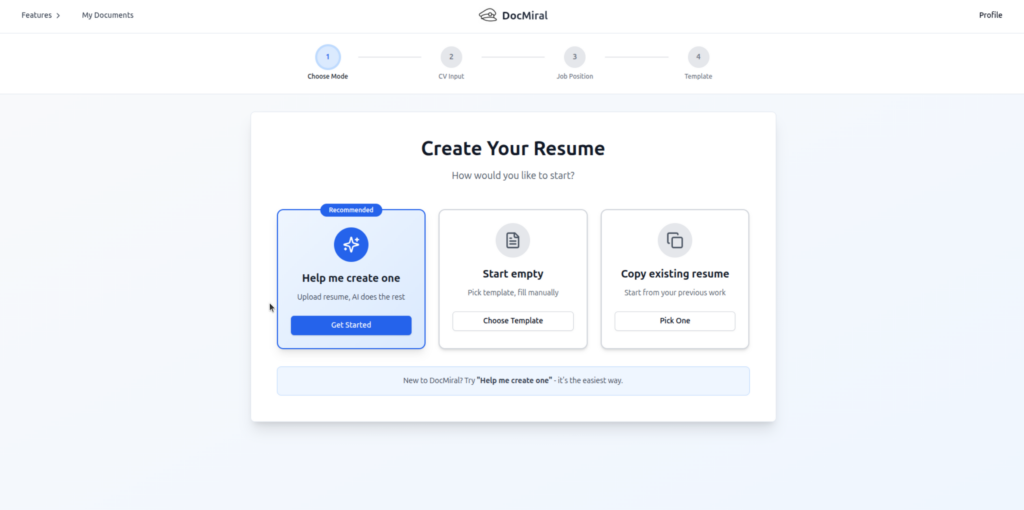
Step 2: Upload Your Old CV
Upload your PDF resume. The system extracts content including job history, education, and skills.
The parsing endpoint converts your CV into structured JSON aligned with resume MiniApps.
Step 3: Auto-Populate a Modern Template
Once parsed, the data is injected into a clean, ATS-friendly template.
This includes:
- Single-column layout
- Clear section hierarchy
- Structured bullet points
- Optimized spacing for readability
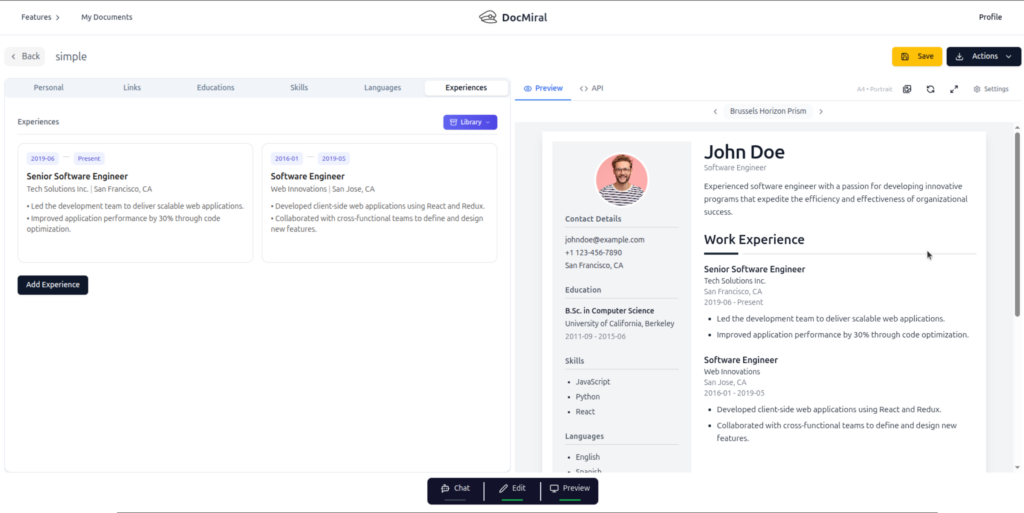
Step 4: Refine Using TARS AI
You can now chat with TARS directly inside the document builder.
Examples:
- “Improve my experience descriptions”
- “Add more impact to my bullet points”
- “Tailor this resume for a backend engineering role”
TARS updates only the relevant sections without breaking the structure.
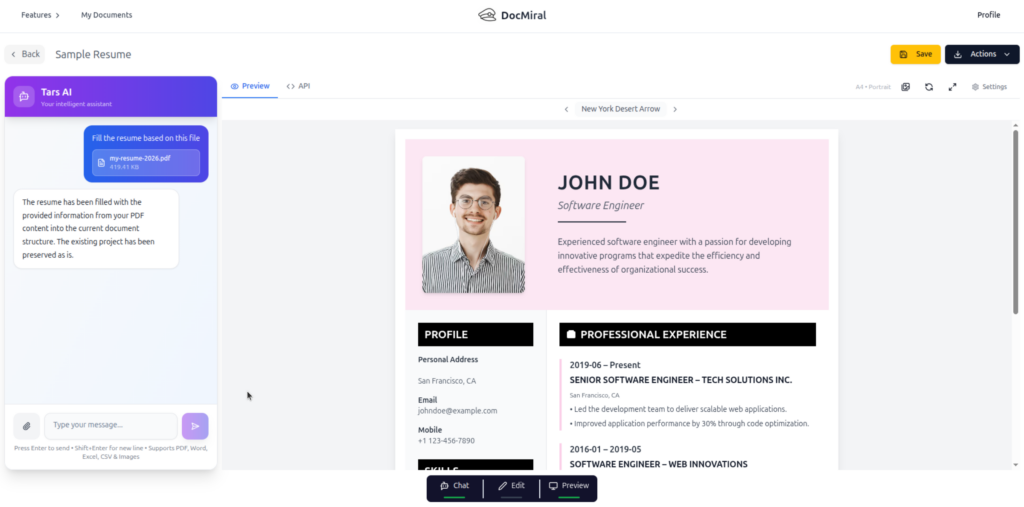
Step 5: Live Preview and Adjust
The live preview ensures that every change is reflected instantly.
You can tweak spacing, sections, or content without losing structure.
Step 6: Export Your Resume
Finally, export your resume as a PDF.
The output is clean, consistent, and optimized for both humans and machines.
Why This Beats Manual Resume Builders
Traditional resume builders treat resumes like forms. This approach treats them like systems.
- No repetitive data entry
- No formatting guesswork
- No broken layouts
- No rewriting from scratch
Instead, you work with structured data that can be reused, refined, and regenerated.
Reuse Your Data with Buckets
One of the biggest advantages is reusability.
Once your resume data is structured, you can store it in Buckets.
This allows you to:
- Reuse experience across multiple resumes
- Generate role-specific versions instantly
- Maintain consistency across documents
This turns your resume into a living data source, not a static file.
Final Thoughts
Building an AI resume generator in 2026 is no longer complex.
The combination of CV parsing, structured MiniApps, and dynamic templates makes it accessible to both users and developers.
If you are still editing resumes manually, you are working against the system.
The future is structured, automated, and AI-assisted.
Try It Yourself
You can try the free ATS resume generator directly at
Upload your CV, generate your resume, and see the difference.
Then upgrade to a full account to unlock Buckets, reusable templates, and API-based generation.
Leave a Reply